Beef Stroganoff Recipe
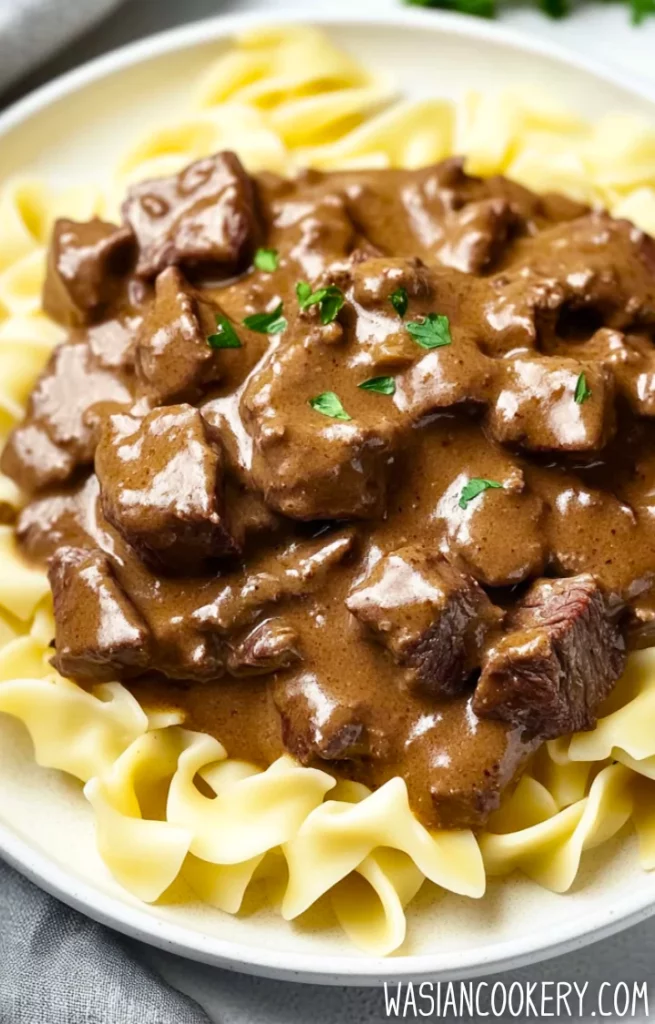
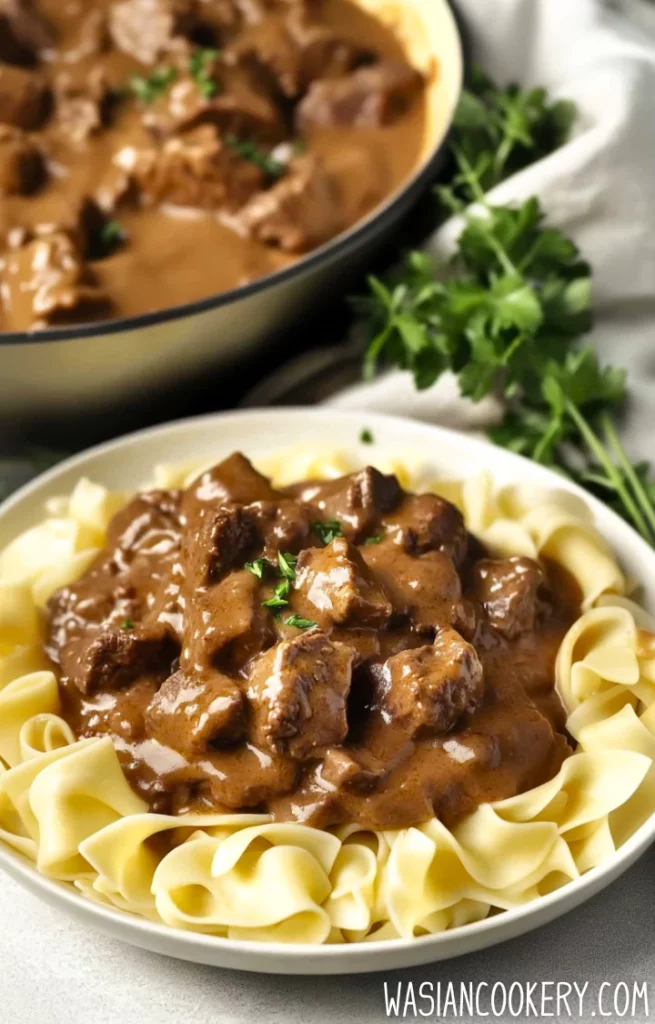
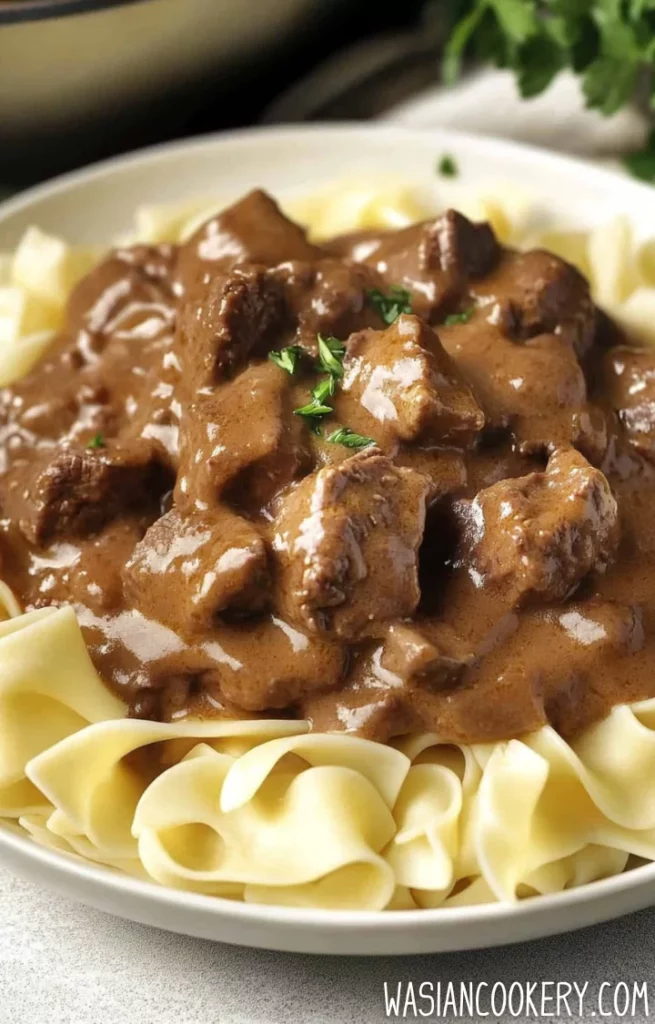
My husband loves this Beef Stroganoff, and it is one of my favorite comforting dinners too. The rich sauce, tender beef, and smooth sour cream make every bite feel cozy, especially when the sauce settles into a bowl of warm egg noodles.
You only need a few familiar ingredients, including beef, sour cream, broth, onion, and garlic. Worcestershire sauce adds savory depth, and the optional Dijon gives a gentle tang. Mushrooms are a lovely extra if you enjoy them, but the main recipe does not depend on having them in the refrigerator.
For an easy meal, serve it with egg noodles and steamed vegetables, with garlic bread on the side if you like. The 50-minute method uses tender sirloin. Stew meat is included as an option in the ingredient list, but it needs a much longer covered simmer before the dairy goes in, as explained below.
Why This Dish Is Great
- The sour cream and broth make a creamy sauce with enough tang to keep the rich beef flavor balanced.
- Brown bits left in the skillet become part of the sauce, so the simple ingredients taste savory and full.
- Sirloin strips cook quickly when they are sliced across the grain and browned in small batches.
- Egg noodles catch the sauce well, while rice or potatoes offer easy ways to change the serving style.
- Optional mushrooms, fresh herbs, or a little heat let you adjust the dish without changing its comforting character.
- The recipe makes four generous servings, with clear storage guidance for any portions you want to save.
What Is the Best Beef for Stroganoff?
Sirloin is the practical choice for this quick skillet version. Look for a steak with an even thickness and trim away tough connective tissue before slicing. Cutting across the visible lines of muscle shortens those fibers, making each bite easier to chew. Tenderloin also suits quick cooking, while flank steak needs especially careful slicing across the grain.
A package labeled stew meat often contains tougher cuts that need slow, moist cooking. Thin slices may shorten that cooking time, but they do not turn chuck into sirloin. If you choose stew meat, allow roughly 90–120 extra minutes of covered simmering, and keep cooking if it is still chewy. The final fork-tender feel matters more than a fixed clock time. Add sour cream only after this longer stage.
Ingredients
- 1 lb (450g) beef sirloin or stew meat, cut into thin strips
- 1 tablespoon olive oil
- 1 small onion, finely chopped
- 2 cloves garlic, minced
- 1 cup beef broth
- 1 tablespoon Worcestershire sauce
- 1 teaspoon Dijon mustard (optional)
- 1 cup sour cream
- 2 tablespoons all-purpose flour
- Salt and pepper, to taste
- 2 tablespoons fresh parsley, chopped (for garnish)
- 1 lb (450g) egg noodles or pasta (for serving)
Kitchen Equipment You Will Need
As an Amazon Associate I earn from qualifying purchases.
- Large skillet
- Skillet lid
- Large pasta pot
- Colander
- Wooden spoon
- Whisk
- Mixing bowls
- Measuring cups
- Measuring spoons
- Chef knife
- Cutting board
- Paper towels
- Tongs
- Instant-read thermometer
- Resting plate
- Serving spoon
- Shallow storage containers
How To Make Beef Stroganoff
Step 1: Prepare the beef and noodles
For the quick version, use the sirloin option and cut it across the grain into thin, even strips, about 1/4 inch thick. Pat dry and season with salt and pepper. Reserve 1/4 cup of the measured 1 cup beef broth in a bowl for the flour mixture. For sirloin, set a large pot of water on to boil for the noodles. For stew meat, wait until the meat is nearly tender before starting the noodle water. Keep raw beef and its utensils away from other ingredients.
Step 2: Brown in two batches
Heat the measured 1 tablespoon olive oil in a large skillet over medium-high heat. Brown the sirloin in two uncrowded batches, about 3–4 minutes per batch or as needed. Check the thickest strips with the thermometer probe inserted from the side; whole-cut beef must reach 145°F (63°C), followed by a 3-minute rest on a clean plate. The resting can overlap the sauce preparation. If using stew meat instead, brown it in batches now and follow the longer covered cooking branch in the next step; browning alone will not make it tender.
Step 3: Cook the onion and choose the beef method
Reduce the heat to medium. Cook the onion in the same skillet for about 3–5 minutes until softened, stirring; add the garlic and cook 1 minute. Stir in the remaining 3/4 cup broth, Worcestershire sauce, and optional Dijon, scraping up the brown bits. For sirloin, leave the beef on its plate and continue to the next step. For stew meat, return the browned beef now, cover, and simmer gently for about 1 1/2–2 hours or until fork-tender, checking earlier for very thin strips. Add a little water as needed to keep liquid around the meat and prevent the pan drying out. Stew cuts may take longer; do not add sour cream until they are tender.
Step 4: Thicken the sauce and cook the noodles
Whisk the 2 tablespoons flour into the reserved 1/4 cup cool broth until smooth. Stir this mixture into the simmering skillet, then simmer gently for about 5–7 minutes, stirring, until the sauce thickens and the flour is cooked. For the stew-meat version, do this only after the beef is tender. Meanwhile, cook the measured egg noodles or pasta in the boiling water according to the package directions and drain in a colander.
Step 5: Add the sour cream gently
Put the sour cream in a bowl and gradually stir in several spoonfuls of the hot sauce to warm it gently. Reduce the skillet heat to low, then stir in all the warmed sour cream until the sauce is smooth. Keep the sauce below a boil after adding the dairy to help prevent splitting.
Step 6: Warm the beef in the sauce
Return the rested sirloin and any juices to the sauce and warm gently for about 1–2 minutes, just until hot, without prolonged simmering. For the stew version, the tender beef is already in the skillet, so simply warm the finished sauce gently. Taste and adjust salt and pepper. The 50-minute timing covers sirloin, including two browning batches and the overlapping 3-minute rest; the stew version adds roughly 90–120 minutes or longer for tenderness.
Step 7: Garnish and serve
Serve the beef and sauce over the drained noodles and garnish with all 2 tablespoons chopped parsley. Divide into four generous portions, or serve smaller portions to suit your meal. Refrigerate leftovers promptly in shallow containers; do not leave the skillet on the counter to cool completely.
Notes
- Dry beef browns more readily than wet beef. Leave some space between strips so moisture can escape instead of collecting in a crowded pan.
- Keep the full tablespoon of oil within the recipe. Spread it across the pan and use a skillet that releases the meat well rather than adding oil for every batch.
- Use the reserved cool broth to blend the flour before it reaches the hot skillet. Sprinkling dry flour into finished cream sauce can leave stubborn lumps.
- Let the flour mixture simmer before adding sour cream. The sauce should coat a spoon while still flowing enough to spread over the noodles.
- Warm the sour cream gradually with a little hot sauce first, then keep the skillet on low. A hard boil can make the dairy look grainy or separated.
- If the finished sauce is thicker than you like, loosen it with a small splash of water. Stir before adding more; the noodles will also absorb some sauce.
- Taste near the end before adding more salt. Broth and Worcestershire vary in saltiness, and a sauce tastes saltier as liquid evaporates.
Ingredients You Can Add
- Sliced mushrooms bring an earthy flavor. Sauté them with the onion and let their released liquid cook away before proceeding.
- A little fresh thyme gives a gentle herbal note that works well with the beef and creamy sauce.
- Finely chopped rosemary adds a stronger aroma; use a light hand so it does not overwhelm the sour cream.
- Tarragon gives the sauce a different herbal finish. Stir it in near the end rather than boiling it for a long time.
- Red pepper flakes or a dash of hot sauce bring some warmth to an otherwise mild dinner.
- A handful of fresh spinach can wilt in the hot sauce near the end. Give it time to soften before you decide whether the sauce needs thinning.
What To Serve With Beef Stroganoff
Egg noodles have a soft texture that goes naturally with the creamy sauce. If you prefer potatoes, Texas Roadhouse mashed potatoes make a comforting alternative to the listed pasta. Use one main starch or serve smaller amounts of each so the plate does not feel too heavy.
A fresh side salad balances the richness. You can dress crisp greens with Texas Roadhouse Caesar dressing, or keep the vegetables simple with steamed broccoli or green beans. Put the salad on the side rather than beneath the hot sauce.
For a crunchy contrast, try crispy Wasian potatoes. Garlic bread is another good choice for catching sauce left on the plate. Keep extra sauce in the skillet until serving, since noodles left soaking in it will continue to absorb liquid.
Variations and Swaps
- Mushroom stroganoff: cook sliced mushrooms with the onion until their moisture has reduced, then continue with the sauce. This adds an earthy flavor without needing a different sauce base.
- Ground beef: use the same pound of ground beef in place of strips and cook it to 160°F (71°C). Break it up as it cooks, remove excess fat, and finish with the same sauce; steak resting guidance does not replace the higher ground-meat temperature.
- Chicken version: the chicken alternative works with boneless breast or thigh pieces. Cook every piece to 165°F (74°C); the beef time and temperature do not apply.
- Beef and pork: the mixed-meat option can use tender pork loin strips for part of the same total pound of meat. Whole-cut beef and pork each need 145°F and a 3-minute rest. If either meat is ground, cook the mixture to 160°F.
- Mushroom-only version: use mushrooms in place of beef, vegetable broth, and a vegetarian Worcestershire sauce. Standard Worcestershire may contain fish, so check its label.
- Greek yogurt: plain full-fat Greek yogurt gives a tangy finish in place of sour cream. Temper it and stir it in off the heat; lower-fat dairy is more likely to split.
- Different noodles: fettuccine works in place of egg noodles. For zucchini noodles, cook them separately and drain well before adding the sauce so they do not water it down.
- Extra herbs or heat: finish with thyme, tarragon, or a little hot sauce from the suggestions above. Make small adjustments after the beef is fully cooked so you can taste the sauce safely.
Storage
Refrigerate leftover beef, sauce, and noodles promptly in shallow covered containers at 40°F (4°C) or below. Store the noodles separately when possible so they do not absorb all the sauce. Get leftovers into the refrigerator within two hours, or within one hour if the surroundings are above 90°F (32°C). Do not leave them on the counter until completely cool. Use within three to four days.
Freeze portions in freezer-safe containers for up to three months for best quality, then thaw overnight in the refrigerator. The sour cream sauce may separate a little after freezing. Reheat gently on the stove, stirring and adding a splash of water if needed, until the beef and sauce reach 165°F (74°C). Warm the noodles separately and serve together once both are hot.
FAQ
Why is my beef tough?
The strips may have been cut with the grain, overcooked, or made from a tougher stew cut. Sirloin needs brief cooking; stew meat needs a long covered simmer before the sour cream is added. These two problems have different fixes, so check which cut you started with.
Can I use stew meat in the quick method?
No. Brown it first, then follow the covered broth simmer in Step 3 until fork-tender. Allow about 90–120 extra minutes, sometimes longer. Keep liquid around the meat and add the flour mixture and sour cream only after it is tender.
How do I avoid lumps in the sauce?
Whisk the flour into the reserved cool broth until smooth before stirring it into the simmering pan. Stir well while it thickens. This uses the measured flour already in the recipe rather than adding another spoonful after the sauce is finished.
Why did my sour cream sauce split?
Dairy can separate if it meets very hot liquid or boils hard. Warm it gradually with spoonfuls of sauce, lower the heat, and stir gently. If the sauce starts to look grainy, take the pan off the heat and stir instead of boiling it harder.
Can I make this ahead?
Yes, though sirloin is most tender when served shortly after cooking. Refrigerate promptly and reheat only the portions you need to 165°F. Keep the noodles separate so they hold their shape and leave enough sauce for serving.
Can I use a slow cooker?
The short skillet method is not a direct slow-cooker recipe. A stew cut needs a separate long-cooking schedule, while sirloin can become tough with hours of cooking. Follow the covered stovetop branch here when using stew meat, and save the dairy for the end.
Short Description
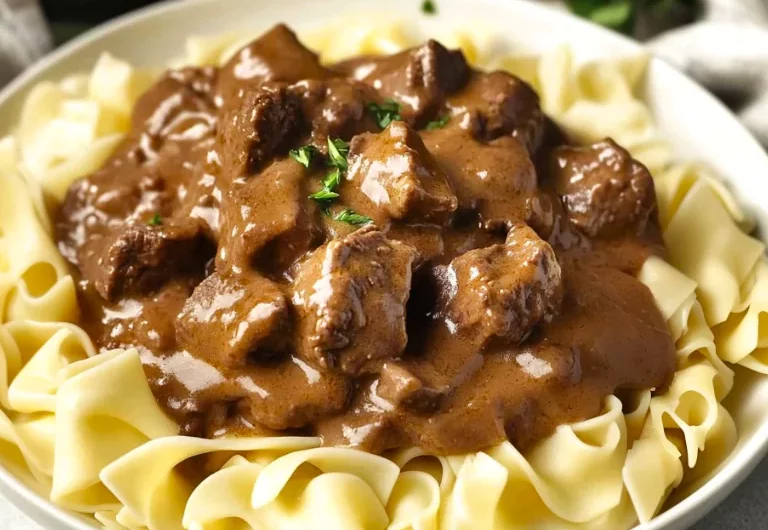
Beef Stroganoff combines thin strips of sirloin with onion, garlic, and a creamy sour cream sauce over egg noodles. A separate longer simmer is included for the stew-meat option.
Beef Stroganoff Recipe
Course: MainCuisine: Russian-AmericanDifficulty: Easy4
servings15
minutes35
minutes50
minutesBeef Stroganoff combines thin strips of sirloin with onion, garlic, and a creamy sour cream sauce over egg noodles. A separate longer simmer is included for the stew-meat option.
Ingredients
1 lb (450g) beef sirloin or stew meat, cut into thin strips
1 tablespoon olive oil
1 small onion, finely chopped
2 cloves garlic, minced
1 cup beef broth
1 tablespoon Worcestershire sauce
1 teaspoon Dijon mustard (optional)
1 cup sour cream
2 tablespoons all-purpose flour
Salt and pepper, to taste
2 tablespoons fresh parsley, chopped (for garnish)
1 lb (450g) egg noodles or pasta (for serving)
Directions
- For the quick version, use the sirloin option and cut it across the grain into thin, even strips, about 1/4 inch thick. Pat dry and season with salt and pepper. Reserve 1/4 cup of the measured 1 cup beef broth in a bowl for the flour mixture. For sirloin, set a large pot of water on to boil for the noodles. For stew meat, wait until the meat is nearly tender before starting the noodle water. Keep raw beef and its utensils away from other ingredients.
- Heat the measured 1 tablespoon olive oil in a large skillet over medium-high heat. Brown the sirloin in two uncrowded batches, about 3–4 minutes per batch or as needed. Check the thickest strips with the thermometer probe inserted from the side; whole-cut beef must reach 145°F (63°C), followed by a 3-minute rest on a clean plate. The resting can overlap the sauce preparation. If using stew meat instead, brown it in batches now and follow the longer covered cooking branch in the next step; browning alone will not make it tender.
- Reduce the heat to medium. Cook the onion in the same skillet for about 3–5 minutes until softened, stirring; add the garlic and cook 1 minute. Stir in the remaining 3/4 cup broth, Worcestershire sauce, and optional Dijon, scraping up the brown bits. For sirloin, leave the beef on its plate and continue to the next step. For stew meat, return the browned beef now, cover, and simmer gently for about 1 1/2–2 hours or until fork-tender, checking earlier for very thin strips. Add a little water as needed to keep liquid around the meat and prevent the pan drying out. Stew cuts may take longer; do not add sour cream until they are tender.
- Whisk the 2 tablespoons flour into the reserved 1/4 cup cool broth until smooth. Stir this mixture into the simmering skillet, then simmer gently for about 5–7 minutes, stirring, until the sauce thickens and the flour is cooked. For the stew-meat version, do this only after the beef is tender. Meanwhile, cook the measured egg noodles or pasta in the boiling water according to the package directions and drain in a colander.
- Put the sour cream in a bowl and gradually stir in several spoonfuls of the hot sauce to warm it gently. Reduce the skillet heat to low, then stir in all the warmed sour cream until the sauce is smooth. Keep the sauce below a boil after adding the dairy to help prevent splitting.
- Return the rested sirloin and any juices to the sauce and warm gently for about 1–2 minutes, just until hot, without prolonged simmering. For the stew version, the tender beef is already in the skillet, so simply warm the finished sauce gently. Taste and adjust salt and pepper. The 50-minute timing covers sirloin, including two browning batches and the overlapping 3-minute rest; the stew version adds roughly 90–120 minutes or longer for tenderness.
- Serve the beef and sauce over the drained noodles and garnish with all 2 tablespoons chopped parsley. Divide into four generous portions, or serve smaller portions to suit your meal. Refrigerate leftovers promptly in shallow containers; do not leave the skillet on the counter to cool completely.
Notes
- The 50-minute timing is for sirloin: 15 minutes preparation and about 35 minutes cooking, including two browning batches, noodle cooking alongside the sauce, and a 3-minute beef rest during sauce preparation.
- Stew meat needs about 1 1/2–2 additional hours of gentle covered simmering in the broth, or longer until fork-tender, before the flour mixture and sour cream are added. Maintain liquid with a little water as needed. Total is roughly 140–170 minutes or longer for this branch.
- Whole-cut beef needs 145°F (63°C) and a 3-minute rest. The original optional beef-and-pork variation uses tender pork strips for part of the same total pound; whole-cut pork also needs 145°F and a 3-minute rest. Ground beef or pork needs 160°F; chicken needs 165°F.
- Optional sliced mushrooms may be sautéed with the onion until their liquid cooks away. Plain full-fat Greek yogurt can replace sour cream; temper it and stir it in off the heat.
- Refrigerate promptly in shallow containers within 2 hours, or 1 hour above 90°F. Use within 3–4 days or freeze up to 3 months for best quality. Thaw in the refrigerator and reheat to 165°F.